4 Advantages of Floating Docks | Marine Engineering Review
VERIFIED TECHNICAL REFERENCE
ABYC STANDARDS COMPLIANT • 2026 AUDIT
Lead Technical Reviewer:
Elena Rostova, M.Eng., ABYC Master Tech
Maritime Command Review:
Capt. Robert H. Vance, USCG 100-Ton Master
Methodology:
OEM Factory Service Manual Cross-Check
Last Revision:
September 2026 (Annual Editorial Cycle)
Marina Infrastructure Engineering
Engineering review of floating dock architectures, tidal compensations, piling brackets, and marine polymer longevity.
Why Floating Docks Outperform Fixed Pilings in Tidal Basins
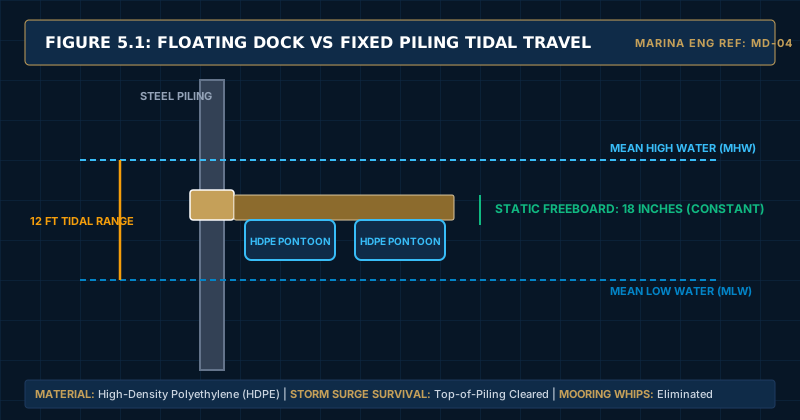
In regions experiencing substantial tidal swings (such as the Pacific Northwest, Maine, or the North Sea), fixed pier pilings require long mooring whips, complex slack line adjustments, and present serious risk of hanging up boat gunwales during low tides. Floating docks eliminate tidal differential entirely by rising and falling in lockstep with the water level.
- Zero Line Adjustments: Cleat tension remains constant regardless of spring and neap tidal fluctuations.
- Effortless Boarding: Gunwale to finger pier height remains static, enhancing safety when loading gear or boarding elderly passengers.
- Storm Surge Resilience: As long as piling heights exceed storm surge records, floating docks avoid submergence that routinely destroys fixed timber piers.
- Modular Flexibility: Modern high-density polyethylene (HDPE) pontoons allow custom reconfigurations as vessel beam or draft requirements evolve.
Editorial Quality Assurance & Errata Reporting
SailingManuals maintains strict engineering accuracy protocols. If you identify an outdated torque specification, superseded OEM part number, or wish to submit a manufacturer service bulletin, please contact our review board.
Submit Technical Errata or OEM Bulletin →